QuickBooks Business Bookkeeping CleanupWhich file already filed a year
Four questions are public. Yours can be a fifth.
Ask your question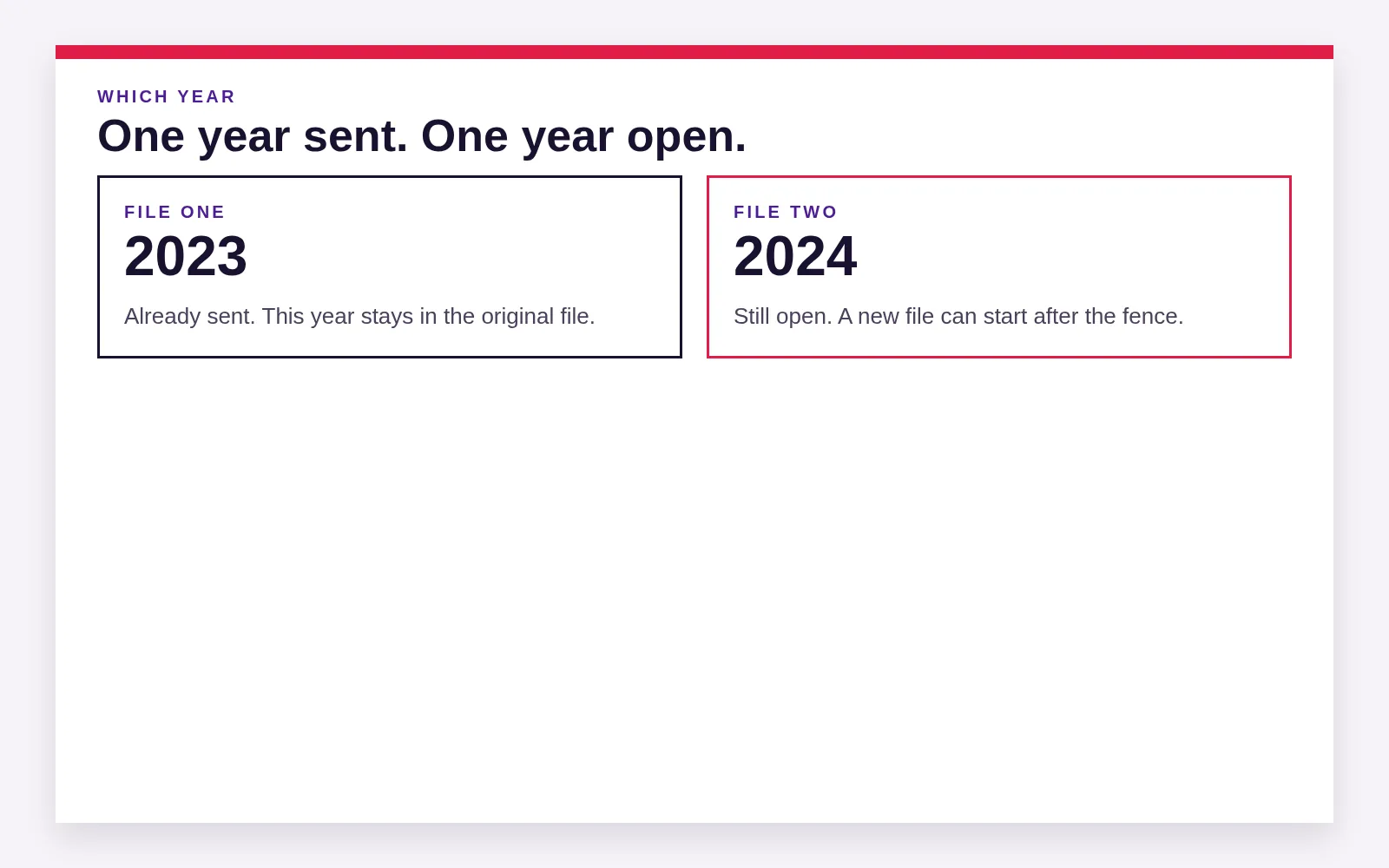
Can two LLCs stay in one file
Sometimes, and only on purpose. If both are the same election, the year is still open, and you can still read each one, a shared file can be a bridge you mean to keep. The moment a lender, a buyer, or a return needs one company, the bridge becomes a mix.
Two companies under one login are a meeting spot until one of them has to file alone. A lender, a buyer, or a return can be the moment that ends the shared room. Until that moment a shared file can be a bridge you mean to keep. After it, the shared file is a mix, and the mix cannot answer for one company by itself.
Do you rename classes before the election
No. A class named for an LLC is evidence. Renaming it before the election is known throws the evidence away. We read the names, write down the election or the gap, and only then decide whether a row stays, moves, or becomes the name of a new file.
The election is disregarded, partnership, or S status. This page does not pick one. State it, or state that you do not know. Not knowing is a useful answer. It stops the merge.
What happens to a filed year if a second file starts
The filed year stays in the original file. A closing date fences it. The new file starts on a named day, after that fence, and it does not inherit the closed year as if the year were still open.
Will we merge two files if you ask? Not when the merge would pour two legal names together, or pour a filed year into an open year, or pour a class list into a product list to tidy. Tell us which merge you were advised to make. The answer is specific to that advice.
The question that is still yours
If these four did not cover it, send it. The reply answers that question and does not turn into a second pitch. We also say whether it belongs on a call.
How a year gets fenced
A filed year has a closing date. Reports for that year keep coming from the file that built the return. The new file, if one is needed, starts on a later day you name before any export. It does not inherit the closed year as if the year were still open.
Opening amounts in the new file belong in retained earnings. They do not belong in a leftover equity bucket the software creates and then forgets. An asset already used up can be booked with a cost and the depreciation already taken, and with no equity leg at all.
The fence fails if someone copies the closed year into the new file to make the history look continuous. It also fails if the class names are rewritten before the election is known, or if a shared bank feed is treated as proof of one company. We name those three failures before any export.
If your case is one company and a messy year that is still open, say that. The fence is for a year that has already been sent. An open year can be repaired in place, once the count says the file and the company are the same.
Bring the year that was filed, the software closing date if you can see one, and the legal name on that return. Those three facts tell us whether the new file is even allowed to start. If the return is still being prepared, say that too. A year in draft is not the same as a year already sent, and the fence is different.
A buyer who asks for one company should be given that company. A shared login cannot be renamed on the cover page and called a fix. We will say so in writing if you need the sentence for the buyer, and the sentence will match what the papers show.
Send the question
The one the four did not cover.

You will be talking to the Steven Palmieri practice.