QuickBooks Business Bookkeeping CleanupAsk the election before a new file
Disregarded, partnership, or S status. This page does not pick one for you.
State the election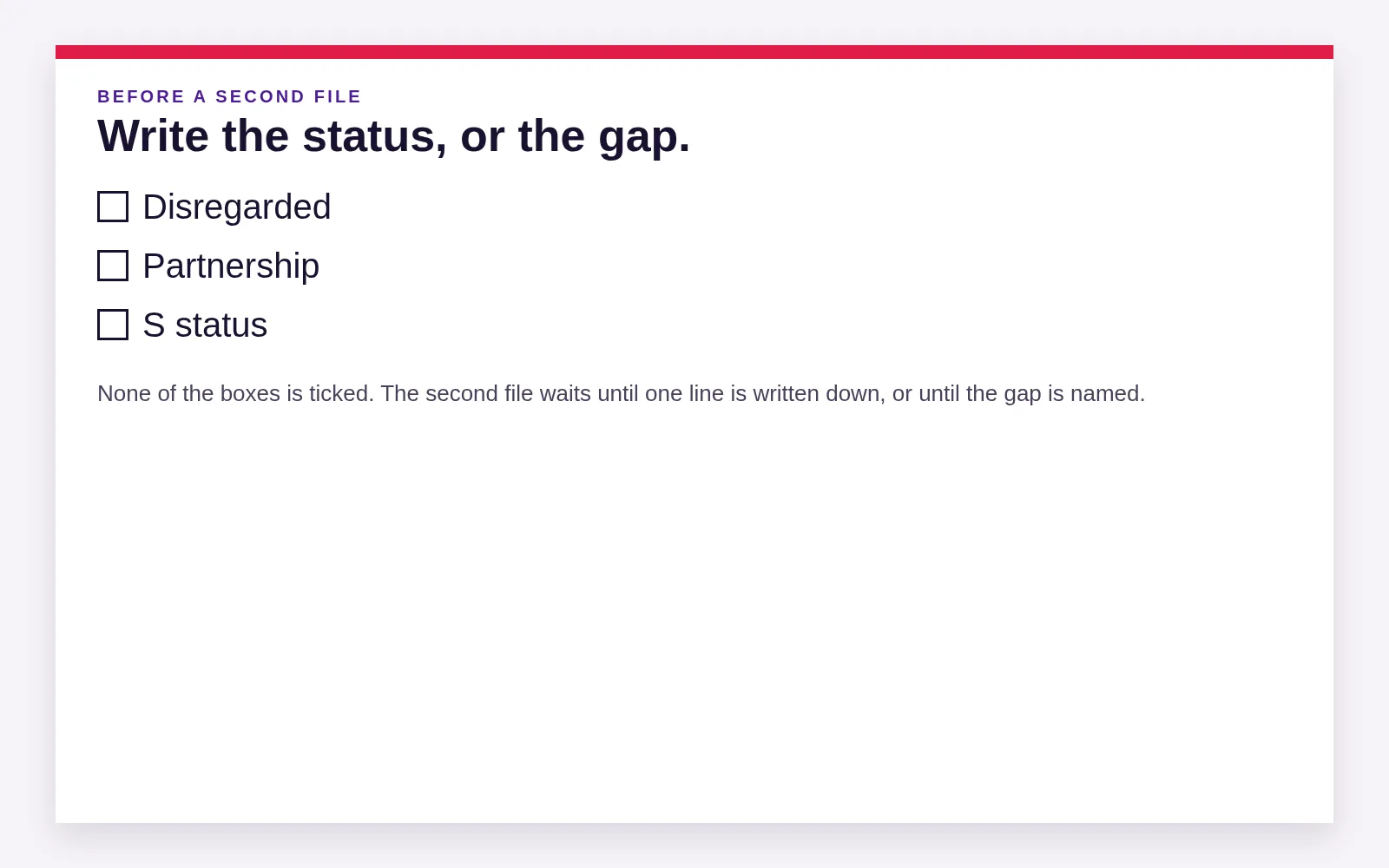
Why the election is first
A second file is a new set of books for a company that already has a tax life. If that life is disregarded, the activity may still land on someone's personal return. If it is a partnership, the return is a different shape. If it is an S election, wages for an owner who works in the company come before distributions.
Choosing S status happens on a federal form. The filing that created the company at the Secretary of State was a separate act. We ask which of those you have already finished, and which is still open.
An election you skip shows up when the return is already late. The surprise is the same kind as a road you thought was clear and then could not use that morning. We write the election, or the gap, before a new file starts, so the return is not the first place the question appears.
What the federal papers ask on their own
Disregarded, partnership, or S status is a federal fact about the company, asked before a second file is born. S status is chosen on Form 2553. A classification election for an eligible entity is Form 8832. Creating the company with a secretary of state was a separate act, already finished or still open. We ask which of those papers exist. We do not invent a rate, and we do not promise a saving from the order of the questions.
Estimated tax for an owner can be due on the fifteenth of April, June, September, and January while the year is still open. A second file that ignores those vouchers, or ignores the election, leaves the federal filing sitting in the old login. We name the form and the date the instructions print. A payment can be due even when the return for that year has not been started.
On an S company, wages for an owner who actually works there are settled before anyone talks about a distribution. This page never prices that wage. Order is the whole point.
What to write down
State the election, or state the gap. A gap stops the new file. It does not stop the conversation. Bring the formation date if you have it, and say whether a return has already been filed for the name. That is enough for the first call.
What we will not guess
We do not pick disregarded, partnership, or S status for you. A guess that feels tidy can put wages and distributions in the wrong order. If you do not know, that is the answer we write down, and the new file waits.
S status is a federal election. A filing with the Secretary of State that created the company is a different act, already done or not. We ask which one you have completed. Distributions on an S company wait until wages exist for a working owner. We will not invent the amount.
A federal voucher can be due even when no tax will be due on the finished return. A second file that ignores it leaves the voucher sitting in the old login. We name the due date the instructions print. We do not invent a saving from asking the election first.
Bring the formation date and the last year that was filed, if you have them. Leave the password off the note. The first call can end with a gap still open, and that is a useful ending. It is better than a new file built on a guess.
State the election
Disregarded, partnership, S, or not sure.

You will be talking to the Steven Palmieri practice.